

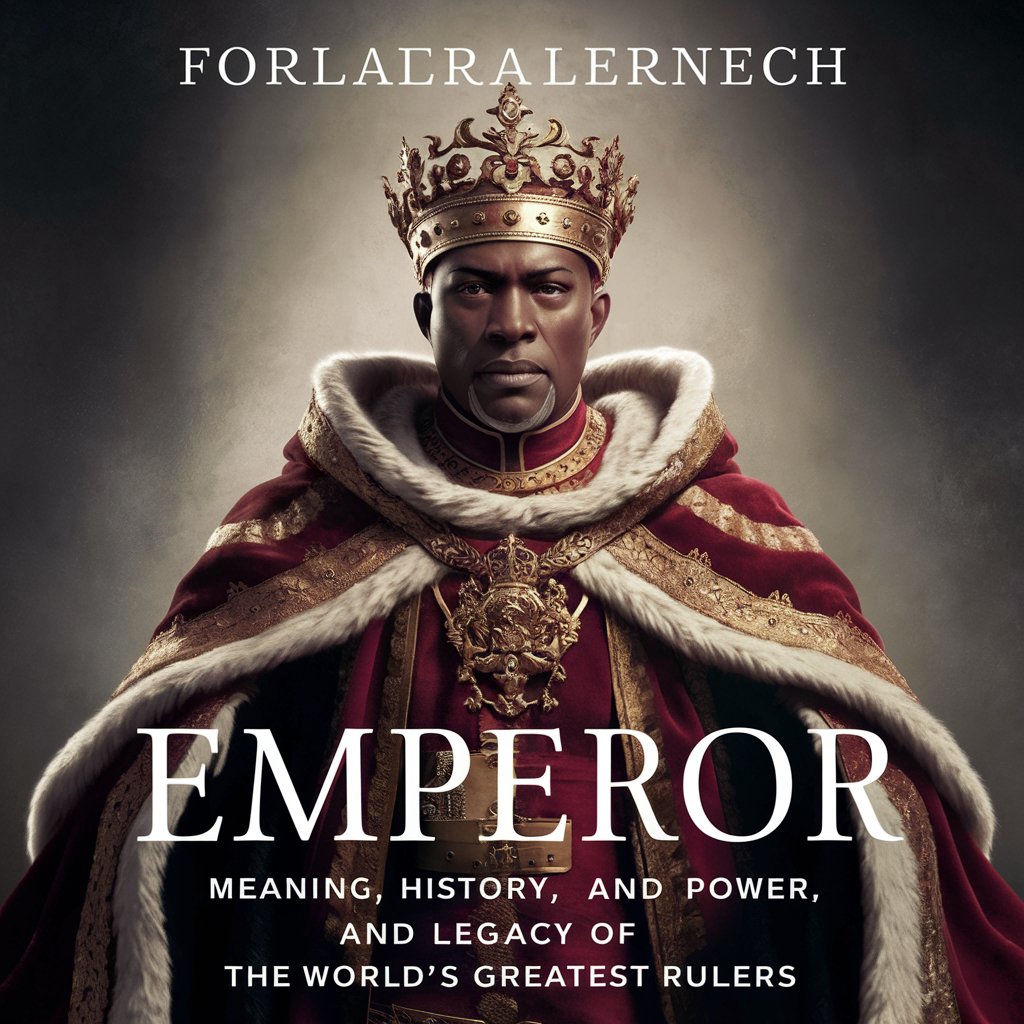
The term emperor has long been associated with supreme authority, grandeur, and the pinnacle of political power. Throughout history, emperors have ruled vast empires, shaped civilizations, and left legacies that continue to influence modern governance and culture. From the Roman Empire to the dynasties of China, Japan, and beyond, the title of emperor has symbolized not only dominance but also divine right and leadership. This article explores the meaning of the word “emperor,” its historical significance, the most famous emperors in history, and how the concept of emperorship has evolved over time.
Who Is an Emperor? Definition and Origin
An emperor is traditionally defined as the sovereign ruler of an empire, holding authority over multiple nations or territories. The word originates from the Latin term imperator, which was used in ancient Rome to denote a victorious military commander. Over time, the title evolved to represent the supreme ruler of the Roman Empire, beginning with Augustus Caesar. Unlike kings, who typically ruled a single nation, emperors governed vast empires encompassing diverse cultures, languages, and peoples. The title carried immense prestige and often implied divine sanction, suggesting that the emperor’s authority was ordained by higher powers.
The Power and Authority of an Emperor in World History
The power of an emperor extended far beyond political control. Emperors were often seen as the embodiment of their empires, representing unity, stability, and divine will. In ancient China, emperors were regarded as the “Son of Heaven,” ruling under the Mandate of Heaven, which justified their reign as long as they governed justly. In Rome, emperors wielded absolute authority, commanding armies, enacting laws, and overseeing vast administrative systems. Similarly, in Japan, the emperor was considered a living deity, symbolizing the spiritual and cultural heart of the nation. The authority of emperors was both political and symbolic, blending governance with religious and cultural significance.
Famous Emperors Who Changed the World
Throughout history, several emperors have left indelible marks on civilization. Augustus Caesar, the first Roman Emperor, established the Pax Romana, a period of relative peace and prosperity that lasted for centuries. Napoleon Bonaparte, crowned Emperor of the French, revolutionized European politics and law through the Napoleonic Code. In Asia, Emperor Qin Shi Huang unified China and initiated the construction of the Great Wall, while Emperor Akbar of the Mughal Empire promoted religious tolerance and cultural flourishing in India. Each of these rulers demonstrated the immense potential of imperial power to shape societies, influence global politics, and define eras of human history.
The Evolution of the Emperor’s Role Through the Ages
The concept of emperorship has evolved dramatically over time. In ancient civilizations, emperors were often absolute rulers with divine status. However, as societies modernized, the role of emperors shifted from autocratic governance to symbolic representation. The fall of empires such as Rome, Byzantium, and the Ottoman Empire marked the decline of traditional imperial rule. Yet, the title persisted in various forms. In Japan, for instance, the emperor remains a constitutional monarch, serving as a cultural and spiritual figurehead rather than a political leader. This evolution reflects humanity’s changing understanding of power, governance, and leadership.
Modern-Day Emperors and the Legacy of Imperial Rule
Although the age of empires has largely passed, the legacy of emperors continues to shape modern nations. The Japanese Emperor, currently a ceremonial figure, represents continuity and tradition in a rapidly changing world. The influence of former empires can still be seen in global languages, architecture, and political systems. The British Empire, though ruled by monarchs rather than emperors, adopted imperial practices that influenced governance worldwide. The concept of an emperor today serves as a reminder of humanity’s complex relationship with authority, ambition, and cultural identity.
The Symbolism of the Emperor in Culture and Religion
Beyond politics, the emperor has been a powerful symbol in art, literature, and religion. Emperors were often depicted as divine or semi-divine beings, chosen by fate or the gods to rule. In many cultures, the emperor represented order, justice, and the connection between heaven and earth. This symbolism persists in modern storytelling, where emperors often appear as figures of wisdom, tyranny, or destiny. The enduring fascination with emperors reflects humanity’s ongoing exploration of power, morality, and leadership.
Conclusion
The title of emperor stands as one of the most powerful and enduring symbols in human history. From the grandeur of Rome to the dynasties of China and the empires of Europe, emperors have shaped the course of civilization through their leadership, ambition, and vision. While the political power of emperors has faded, their legacy continues to influence modern governance, culture, and identity. The story of emperors is ultimately the story of humanity’s quest for order, greatness, and meaning in the exercise of power.
FAQs
1. What is the difference between a king and an emperor?
An emperor rules over an empire that may include multiple kingdoms, while a king typically governs a single nation or territory.
2. Who was the first emperor in history?
The first recognized emperor is often considered to be Sargon of Akkad, who established the Akkadian Empire around 2300 BCE.
3. Who was the most powerful emperor of all time?
Many historians regard Augustus Caesar and Qin Shi Huang as among the most powerful emperors due to their lasting influence on governance and culture.
4. Does the title of emperor still exist today?
Yes, the title still exists in Japan, where the emperor serves as a ceremonial and cultural figurehead.
5. What qualities made a great emperor?
A great emperor combined leadership, vision, military skill, and the ability to unite diverse peoples under a common purpose.
6. How did emperors maintain control over large empires?
Emperors used administrative systems, loyal armies, and religious or cultural authority to maintain control and ensure stability across vast territories.
7. Why are emperors important in world history?
Emperors played crucial roles in shaping civilizations, advancing culture, and influencing political systems that continue to impact the modern world.
