

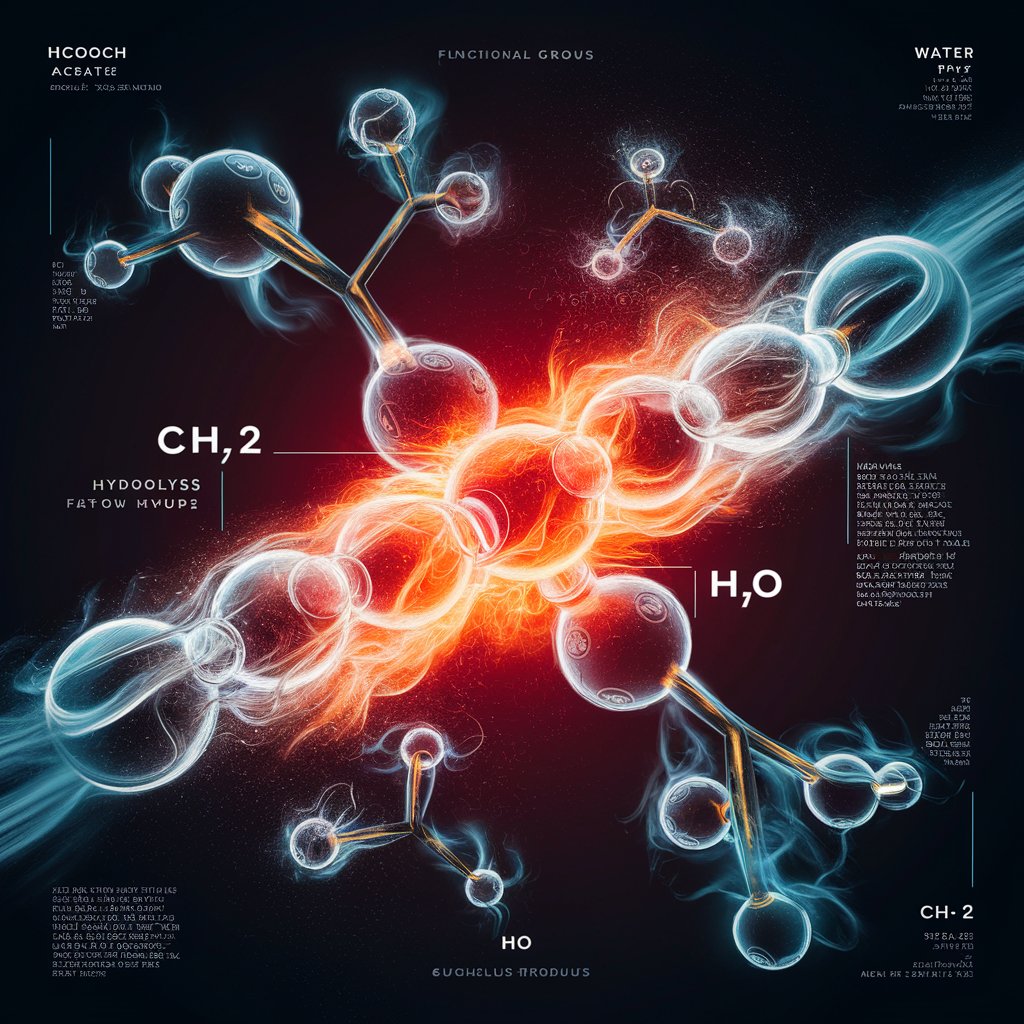
Chemical formulas like HCOOCH, CH₂, and H₂O often appear in organic chemistry lessons and reaction mechanisms, and many students search for a clear explanation of how these components relate to each other. Understanding these formulas requires familiarity with molecular structure, bonding, and functional groups. HCOOCH may represent a fragment of a larger ester or organic compound, CH₂ typically represents a methylene group found in countless molecules, and H₂O is one of the most reactive and essential molecules in chemical processes. While these formulas alone do not specify one exact reaction, studying how they behave provides an excellent opportunity to learn about hydrolysis, bonding, and the behavior of organic molecules in the presence of water. As chemistry becomes an increasingly important field in education and research, simplifying concepts like these helps students and professionals build stronger foundational knowledge.
Understanding the Components: HCOOCH, CH₂, and H₂O
To understand the expression HCOOCH + CH₂ + H₂O, it is important to recognize that each part represents a segment or molecule involved in organic chemistry. HCOOCH resembles part of an ester group, which includes carbon, oxygen, and hydrogen in a structure commonly found in organic compounds like methyl formate or formate esters. Esters are known for undergoing hydrolysis reactions when exposed to water. CH₂, on the other hand, represents a methylene group, which is a versatile structural unit present in numerous organic molecules ranging from simple hydrocarbons to complex biological compounds. Finally, H₂O, or water, is a polar molecule that can act as a reactant, solvent, or catalyst depending on the situation. Together, these components suggest a conceptual scenario in organic chemistry where water interacts with an ester-like group and a carbon unit, typically resulting in breakdown or transformation within the molecule.
The Role of Water (H₂O) in Organic Reactions
Water plays a major role in organic reactions, especially when the reaction involves esters, carbonyl groups, or other functional groups that can undergo hydrolysis. Hydrolysis is the process where a molecule is split by reacting with water, often forming alcohols, acids, or other functional groups depending on the structure. In the context of HCOOCH, which resembles an ester portion, water can theoretically break the bond between the carbonyl carbon and the oxygen, leading to the formation of smaller, more stable products. This ability of water to break chemical bonds comes from its polarity, making it one of the most efficient natural reactants in chemical systems. Understanding how water interacts with these types of molecules helps students grasp why hydrolysis reactions are essential in biological processes, environmental chemistry, and industrial applications.
Understanding the CH₂ Group and Its Behavior
The CH₂ unit, also known as a methylene group, is widely used in drawing organic structures and mechanisms. It is found in alkanes, alkenes, polymers, fatty acids, and thousands of other compounds. The presence of a CH₂ group in a formula such as HCOOCH + CH₂ + H₂O suggests that the molecule may contain a chain or backbone structure where methylene groups link various parts together. CH₂ itself is not typically reactive on its own unless part of a functional group or adjacent to double bonds or electronegative atoms. However, its presence is essential because it forms the basis for the structure of many organic molecules, influencing properties such as flexibility, boiling point, solubility, and interaction with water. Recognizing how CH₂ contributes to the structure helps in predicting how the molecule behaves when exposed to water or other reactants.
Possible Interpretation as a Hydrolysis or Breakdown Reaction
When formulas such as HCOOCH + CH₂ + H₂O appear together, one common interpretation is that they represent a step or fragment of a hydrolysis process. Esters, represented partially by HCOOCH, can break down in the presence of water, producing an alcohol and an acid. If CH₂ groups are part of the molecule, they help form the carbon chain that gives the compound its identity. Even though the exact reaction cannot be identified without full structural formulas, the concept is educational: water can break apart ester bonds, functional groups influence reactivity, and the presence of CH₂ units indicates that part of the molecule forms a hydrocarbon chain. This type of reaction is essential in metabolic pathways, cooking, pharmaceuticals, and environmental processes.
Applications of Learning These Chemical Relationships
Understanding how molecules like HCOOCH, CH₂, and H₂O interact helps students gain problem-solving skills that apply to many branches of chemistry. Whether in organic synthesis, environmental science, food chemistry, or biology, recognizing how functional groups respond to water forms the basis for predicting chemical behavior. When students learn how hydrolysis works or how structural units such as CH₂ influence molecular shape, they can better analyze more complex reactions and mechanisms. Even if a chemical formula appears confusing at first, breaking it down into structural and functional components makes the concepts far more manageable. This approach builds confidence and prepares learners to handle more advanced organic chemistry topics.
Conclusion
The expression HCOOCH + CH₂ + H₂O highlights several fundamental concepts in organic chemistry, including molecular structure, functional groups, and the role of water in chemical reactions. Although the exact reaction cannot be determined without complete structural details, studying how an ester-like fragment, a methylene group, and water interact provides valuable insights into hydrolysis and organic molecule behavior. These topics form the backbone of many processes in nature and industry, making them essential for students and professionals alike. Understanding these relationships allows readers to appreciate how simple formulas can represent complex and meaningful chemical principles.
FAQs About “HCOOCH + CH₂ + H₂O”
1. What does HCOOCH represent?
It resembles part of an ester functional group commonly found in organic molecules.
2. What is the role of CH₂ in a chemical structure?
CH₂ is a methylene group that forms part of the carbon chain in many organic molecules.
3. Why is H₂O important in organic chemistry reactions?
Water often participates in hydrolysis and other reactions because of its polarity and reactivity.
4. Is this an actual reaction?
The expression looks more like a molecular breakdown or conceptual representation rather than a full chemical equation.
5. What kind of reaction involves esters and water?
Hydrolysis, where water breaks the ester into an acid and an alcohol.
