

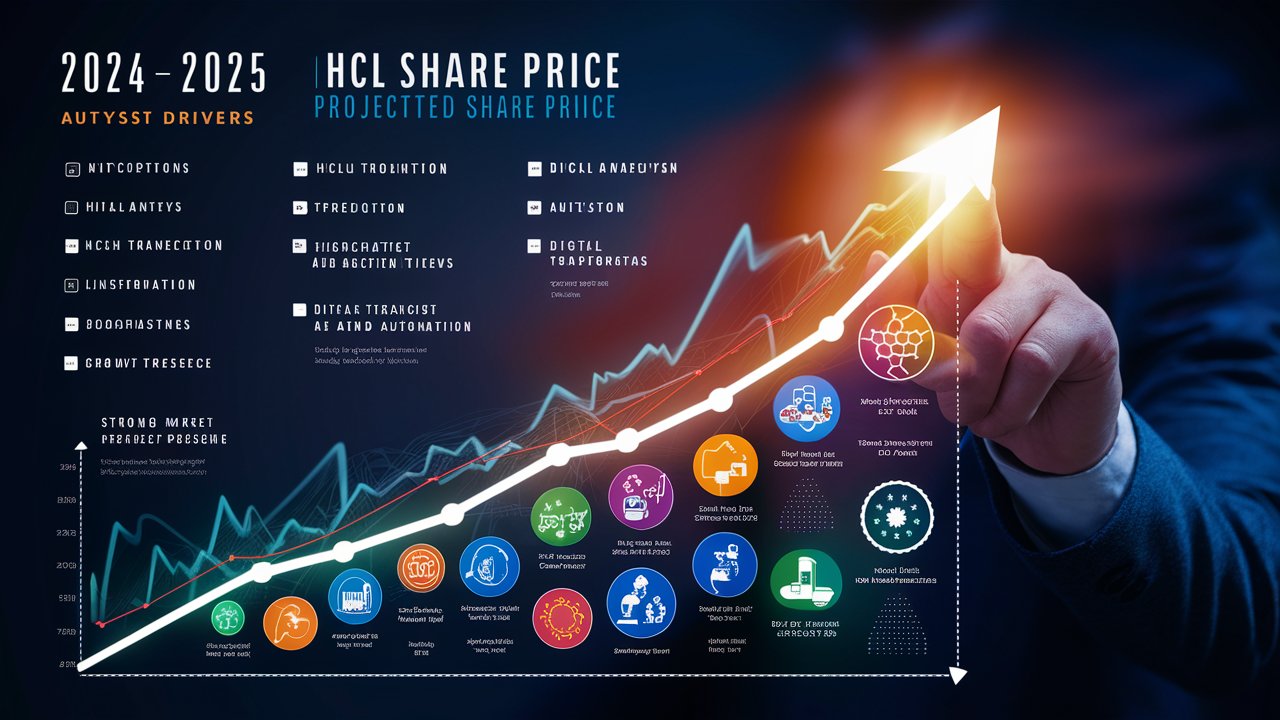
For retail investors, institutional analysts, and market observers, understanding the trajectory of the HCL Tech share price involves peeling back multiple layers—from quarterly financial results and management commentary to global IT spending trends, currency fluctuations, and competitive positioning.This comprehensive article aims to provide an exhaustive analysis of the HCL Tech share price.
Fundamental Analysis: Financial Health and Key Performance Drivers
The bedrock of any sustainable share price movement is the company’s fundamental financial health. For HCL Tech, investors meticulously scrutinize quarterly and annual results to gauge its operational efficiency and growth trajectory.The company’s revenue mix is a critical focal point, as the market rewards a higher proportion of “Mode 2 & 3” services (digital, cloud, and products & platforms) over traditional “Mode 1” (legacy IT infrastructure) services.A holistic fundamental analysis weighs these internal metrics against management’s guidance, assessing the credibility of its forecasts and its strategic execution capabilities in navigating a challenging global environment.
Conclusion
The HCL Technologies share price is a complex synthesis of resilient business fundamentals, strategic execution in high-growth digital arenas, and the unpredictable waves of global economic and sector-specific trends.
FAQ Section
Q1: What are the key financial results to watch in HCL Tech’s quarterly earnings?
A: Focus on Revenue Growth in Constant Currency (to strip out forex effects), EBIT Margin (operating profitability), Net Profit, Deal TCV (especially for new-generation services), Attrition Rate, and the management’s guidance for the upcoming quarter/fiscal year. The commentary on client spending behavior is also crucial.
Q2: Why does HCL Tech sometimes trade at a discount to TCS and Infosys?
It can also reflect differences in business mix, client concentration, or investor preference for the perceived benchmark stature of TCS and Infosys. This discount narrows when HCL Tech demonstrates consistent industry-leading growth or margin expansion.
Q3: How do dividends and buybacks affect the HCL Tech share price?
A: Dividends provide regular income, attracting income-seeking investors and offering support.
Q4: What is the impact of rupee depreciation on HCL Tech’s share price?
A: A depreciating rupee (weaker INR vs. USD) typically benefits IT companies like HCL Tech as a significant portion of their revenue is in dollars.
Q5: Where can I find reliable analyst reports and price targets for HCL Tech?
A: Reliable analyst research is available on financial data platforms like Bloomberg, Reuters (Refinitiv), and Tickertape.
Q6: Is HCL Tech’s share price sensitive to US economic data?
A: Extremely sensitive. As the US contributes a majority of HCL Tech’s revenue, key economic indicators like GDP growth, employment data, and inflation figures influence corporate IT spending decisions.
Q7: What are the biggest risks to HCL Tech’s future share price growth?
A: The primary risks include: 1) A severe and prolonged downturn in key Western economies, crushing IT budgets. 2) Failure to win large deals in digital/cloud, losing market share. 3) Inability to control costs amid high wage inflation and talent attrition. 4) Adverse changes in global trade or visa policies impacting the services delivery model. 5) Rapid technological disruption that makes existing service lines obsolete.
